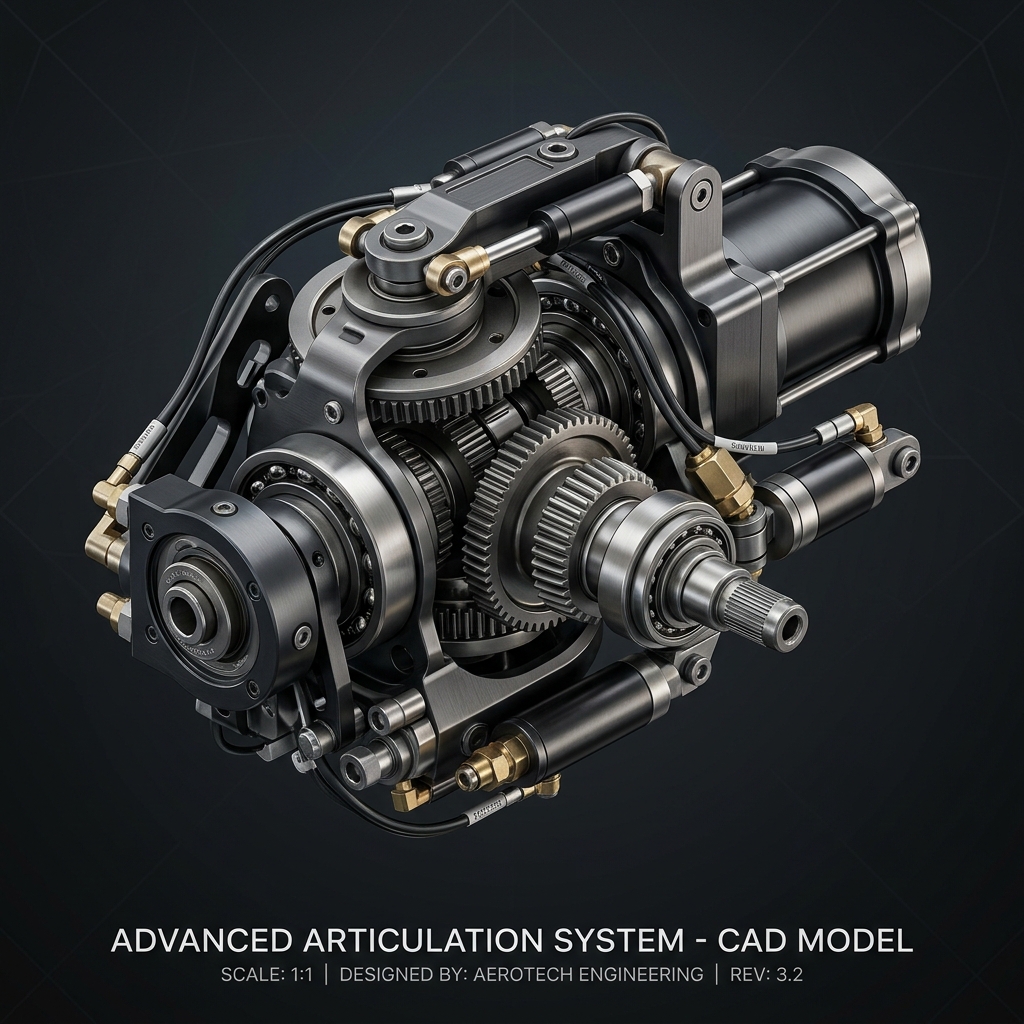
“A perfect 3D model is only half the job. The factory floor runs on drawings — and a single dimension error in a technical drawing can cost more than the entire design process that preceded it.”
In an era where 3D CAD models, digital twins, and model-based definition are reshaping how engineering information is communicated, it might seem that the 2D technical drawing is a relic. The reality is more nuanced. Across manufacturing industries globally — and overwhelmingly in India's engineering and fabrication sector — the 2D technical drawing remains the primary language of production. Machine operators, quality inspectors, fabricators, and toolmakers work from drawings. Drawings are what get stamped, signed, filed, and referenced when disputes arise about what was specified and what was delivered.
Accurate CAD drafting and technical documentation are not a legacy obligation. They are a critical skill that determines whether a product is manufactured correctly, inspected consistently, and documented in a way that supports its entire operational life. This blog explains what professional CAD drafting involves, why accuracy matters at every stage, and what separates high-quality technical documentation from drawings that create manufacturing problems.
What CAD Drafting and Technical Documentation Involve
CAD drafting is the process of creating 2D engineering drawings from 3D CAD models or from design intent — drawings that communicate every dimension, tolerance, surface finish requirement, material specification, and geometric relationship that a manufacturer needs to produce a part or assembly correctly and consistently. Technical documentation extends this to encompass the full set of documents that define, control, and verify a product: drawings, bill of materials, assembly instructions, inspection plans, and revision records.
Professional CAD drafting is not simply tracing a 3D model onto a flat page. It requires engineering judgment about which views communicate the design intent most clearly, how to apply dimensioning and tolerancing schemes that are unambiguous and manufacturable, how to call out surface finish requirements and material specifications correctly, and how to structure a drawing so that someone who has never seen the product before can manufacture it to specification without clarification.
Why Accurate Technical Drawings Define Manufacturing Quality
Dimensions and Tolerances — The Language of Manufacturing Precision
Every dimension on a technical drawing carries two pieces of information: the nominal value and the acceptable variation around it. Tolerances determine whether a manufactured part will function as designed when assembled with mating components. A shaft that is 0.05mm oversized may not fit its bearing. A hole that is 0.1mm too far from its reference may cause interference with an adjacent component. Applying tolerances correctly requires understanding of both the design intent and the manufacturing process. Over-tolerancing drives up manufacturing cost without benefit. Under-tolerancing allows parts to be produced that do not function correctly.
GD&T — Geometric Dimensioning and Tolerancing
Geometric Dimensioning and Tolerancing is the standardised language for communicating complex geometric requirements in technical drawings — flatness, straightness, cylindricity, position, runout, and other geometric characteristics that cannot be adequately specified through coordinate dimensions alone. GD&T is internationally standardised through ASME Y14.5 and ISO GPS standards and is used across aerospace, automotive, and precision engineering globally. Correct GD&T application reduces ambiguity in technical documentation — a GD&T callout has exactly one valid interpretation, enabling consistent production and inspection.
Revision Control and Document Management
A technically accurate drawing with no revision history, no clear material specification, and no traceability to a design revision is a drawing that will cause problems in production. Professional technical documentation includes complete title block information, rigorous revision control tracking every change with its date, author, and reason, and document management practices that ensure only the current approved revision reaches production and inspection. In regulated industries — aerospace, automotive, medical devices — this documentation rigor is a regulatory requirement.
Projection Standards — Getting the Basics Right
Engineering drawings use either first-angle projection (used in Europe, India, and most of the world) or third-angle projection (used in North America). A drawing produced in the wrong projection standard for its intended manufacturing location can result in parts being machined as mirror images of what was intended. This basic error occurs when CAD drafting is done without understanding the production context — and its consequences are entirely avoidable.
ReneChip's CAD drafting and technical documentation services produce drawings to industry standards — correct projection, complete GD&T, rigorous revision control, and material and surface finish specifications appropriate to the manufacturing process and industry context.
Common CAD Drafting Errors That Cause Manufacturing Problems
The most expensive CAD drafting errors are subtle ambiguities that are interpreted differently by the designer and the manufacturer. Dimensions that are missing, requiring the manufacturer to estimate a value that should be specified. Tolerances copied from a previous drawing without analysis of whether they suit this geometry. Views insufficient to fully define a complex feature. Surface finish callouts inconsistent with the specified manufacturing process. Each of these errors represents a gap between what the designer intended and what the manufacturer understands — discovered when the first batch of parts fails inspection or, worse, when assembled products fail in service.
How ReneChip Delivers CAD Drafting and Technical Documentation Services
ReneChip's engineering design team in Tuticorin provides CAD drafting and technical documentation services for clients across India and internationally. Our team produces 2D drawings from 3D CAD models, converts legacy drawings to current CAD standards, creates complete documentation packages for new product introductions, and supports drawing revision and re-release processes. We work in all major CAD platforms — CATIA, SolidWorks, AutoCAD — and produce drawings to ASME, ISO, DIN, and IS standards as required.
Frequently Asked Questions — CAD Drafting and Technical Documentation
Q: What is the difference between CAD drafting and 3D modelling?
3D modelling creates the parametric solid or surface model of a product in three dimensions. CAD drafting converts that 3D model into 2D engineering drawings with dimensions, tolerances, and manufacturing specifications. Both are essential — the 3D model defines the geometry; the 2D drawing defines how it must be manufactured and inspected.
Q: What CAD software does ReneChip use for drafting services?
ReneChip works in CATIA V5, SolidWorks, AutoCAD, and other major CAD platforms. We produce drawings in the client's preferred platform and to the client's specified drawing standard — ASME Y14.5, ISO GPS, or other applicable standards.
Q: Can ReneChip convert legacy 2D drawings to 3D models and current drawing standards?
Yes. Drawing conversion and legacy documentation updating is one of ReneChip's core service areas. We convert 2D DWG and PDF drawings to 3D CAD models and produce updated drawings to current standards, with full revision documentation.
Q: How does ReneChip ensure drawing accuracy before release to clients?
All drawings go through a structured internal review: geometry verification against the 3D model, dimension and tolerance completeness check, standard compliance review, and title block verification. Only reviewed and approved drawings are released to clients.
Q: Can ReneChip handle large drawing packages for complete product documentation?
Yes. ReneChip has delivered complete documentation packages for complex products involving hundreds of part drawings and assembly drawings. Contact info@renechip.com to discuss your documentation requirement.